Fermi Survey Files

The survey description files for the Fermi soft and hard surveys were improperly formatted so that users attempting to use the SkyView jar in batch mode would not be able to query these surveys. The files have been updated in the latest release (with the new SDSS surveys).


Posted in Notices | Leave a comment

SkyView Support for SDSS DR8

We have updated SkyView to use the DR8 release of the Sloan Digital Sky Survey (SDSS). The DR8 includes substantially greater sky coverage and is a major reprocessing of all data in the SDSS. There are a fair number of changes both in the content and internal formats. The changes are summarized by the SDSS team in their differences page. A key change is that the new data are sky subtracted so that individual pixel values are very different between the DR7 and DR8. While the loglog scaling was often helpful is showing features in the DR7, the default log scaling generally does fine with the DR8.

Internally the data provided to SkyView has changed substantially. Data are now compressed using the BZIP2 compression technique and getting efficient support for decompressing these data was one of the reasons it took us so long to update.

Since the DR7 and DR8 differ significantly SkyView will support both for a transition period. The SDSSx survey names will point to the DR8 while the SDSSDR7x surveys will point to the DR7. The servers for the DR8 and entirely different from the DR7. Last week there was some problem with the DR8’s servers’ hardware. If such problems recur you can use the DR7 surveys as a backup. The DR7 surveys are listed at the bottom of the menu in which the DR8 surveys are found.

Since the SDSS data are retrieved from a remote source, SkyView needs to download the data into its cache before processing. SkyView only downloads files once, but SDSS requests may take a little longer than users are used to since we’d already filled the DR7 cache with many of the popular target areas. We’ll phase out DR7 support if and as usage of the DR7 surveys drops off.


Posted in Announce | Tagged | 2 Comments

SkyView Image Gallery – over 10,000 images

Did you know that the image displayed on the SkyView home page is a random image selected from the SkyView Image Gallery which features images created by SkyView users? If you click on the image you can see the specifics – center coordinates, survey, projection, etc. We find it hard to believe we now have over 10,000 images in our gallery and we have seen some truly amazing submissions.

We plan to make some improvements soon to speed up the time it takes to submit the images and to group the images in the gallery so they can be viewed by survey, date, position, etc. We also want to comment more on some of the more unusual images that can be generated in SkyView.

Thank you for your interest in SkyView!

Posted in Discussion | Tagged | 54 Comments

SkyView Allsky Images from Gamma-ray to Radio

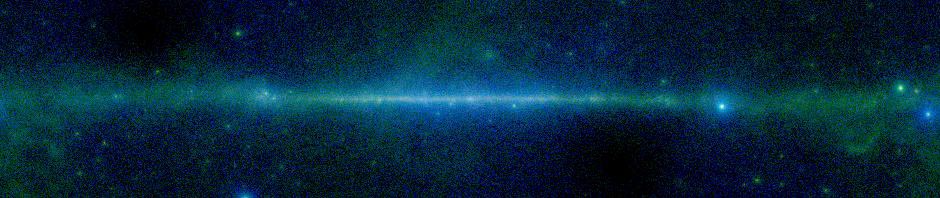
We have been thinking of ways to add more educational aspects to the SkyView website and our first step was to create a slide show of survey data that cover the entire sky. This first image set is in equatorial coordinates and we hope to add galactic images soon and then interactive enhancements as time permits. Of course the first lesson we learn from these images is that the sky looks different in different wavelengths. We also see that certain celestial features come and go. This is typically dependent on the process by which the radiation is emitted.

We hope that these images are interesting to SkyView users. Let us know if you have any comments.

Posted in Notices | Tagged , | 15 Comments

SkyView system usage

The number of SkyView queries has increased by a factor of 5 over the last year and with our recent move to a virtual machine architecture we have been able to accommodate this growth. However we experienced a spike in usage last night that did affect system availability. Although SkyView is processing queries again we are working with our system administrators to analyze and improve the situation. We apologize for any inconvenience.

Posted in Notices | Tagged | 1 Comment

SkyView 2MASS data interruption March 1, 2011

The remote system that serves 2MASS data was down for scheduled maintenance for a couple hours today. As of 3:50pm EST service has been restored and 2MASS data is again available in SkyView. We apologize for any inconvenience.

Posted in Uncategorized | Leave a comment

SkyView Fermi LAT Surveys

We have just released two gamma-ray all-sky surveys based upon the Fermi LAT weekly data. Fermi images go much deeper and have somewhat higher resolution than the old EGRET surveys. Fermi is also sensitive to gamma-rays at significantly higher energies, up to 300 GeV.

The two surveys cover the bands 0.1-5.4 GeV and 5.4-300 GeV. There are many more counts in the lower energy survey and many more sources are apparent there. The surveys are generated from the weekly exposure maps and photon lists supplied by the Fermi LAT team. The exposures are summed together to create an overall exposure map and the photon lists are combined and resampled in 1/8 degree pixels in a Cartesian projection. The combined exposure at the center of each of these pixels is then sampled and weighted by the size of the pixel to get the normalized exposure. The ratio of the counts to the weighted is used to get the intensity of the pixel. Currently we are only providing the intensity maps but we can also include the counts and exposure maps if there is interest. We also hope to provide a 3-D Fermi survey with perhaps 10 energy bands.

Fermi’s new hard band extends SkyView‘s frequency coverage a full decade above the previous upper limit.

Posted in Announce | Tagged , | Leave a comment

SkyView updates GALEX survey

Galaxy Evolution Explorer (GALEX) surveys have been updated to use the GALEX GR6 release. As mentioned in a previous post GR6 improvements include more sky coverage and a bit better calibration. Image generation for GALEX may be slow for a period of time as the data file caches get rebuilt. More GALEX mission information can be found at the Space Telescope Science Institute GALEX page.

Posted in Announce, Notices | Tagged , | 4 Comments

Clip resampling of intensive quantities in SkyView

The SkyView web page now has two different options for using the Clip resampler. The clip resampler computes the overlaps between the user image’s output pixels and the original survey pixels and adds up the contributions from each overlap. The default behavior sets the output pixel to the sum of all of the inputs. This is the only option that used to be available in the Web interface. Using this option if you could integrate over exactly the same region of the sky in both the input and output images, you’d get exactly the same number: flux is exactly conserved.

This makes sense when what is being measured is an extensive quantity like counts or flux. If the output pixels are bigger than the input pixels, then the values in those pixels should typically be bigger too.

Often however, the original data are an intensive measurement: the size of the pixels should not directly affect the values we place in them. E.g., the map might be of temperature or intensity. The temperature at some point should not be proportional to the size of the pixel. If you select the new Clip (Intensive) sampler, the output pixels will the averages over the overlapped pixels in the input. So the output values will not depend directly upon the size of the pixels.

If you are using SkyView-in-a-Jar, this option has always been available with the combination of settings
sampler=Clip ClipIntensive
and we’re now making the choice available on the web as well.
Posted in Uncategorized | 1 Comment

New Fermi and GALEX surveys soon in SkyView

Over the next week or two we’ll be releasing a new and an updated survey set. The Fermi all-sky data will give us a major new image of the gamma-ray sky. Fermi has higher sensitivity and resolution than the EGRET all-sky map — which was one of SkyView‘s original datasets. Once we get Fermi on-board we anticipate updating this survey every few months until we get to the end of the mission, gradually increasing the sensitivity of the survey. If there is interest we can also provide Fermi data as a time resolved image, e.g., with two month resolution.

We’ll also be updating the GALEX surveys to use the GALEX GR6 release. GR6 has more sky coverage and a bit better calibration than the GR4 data we’ve been serving for the past couple of years. We retrieve GALEX data from STScI caching each image locally the first time it is used. We’ll need to flush our caches when we do the upgrade, so getting GALEX images may slow down a little for a while as the caches get rebuilt.

Posted in Notices | Tagged , | Leave a comment